ChatGO - AI Chat Assistant
- 4.6
- Rating
- 5.00M
- Installs
- Free
- Price

 Analysis by App-foxy
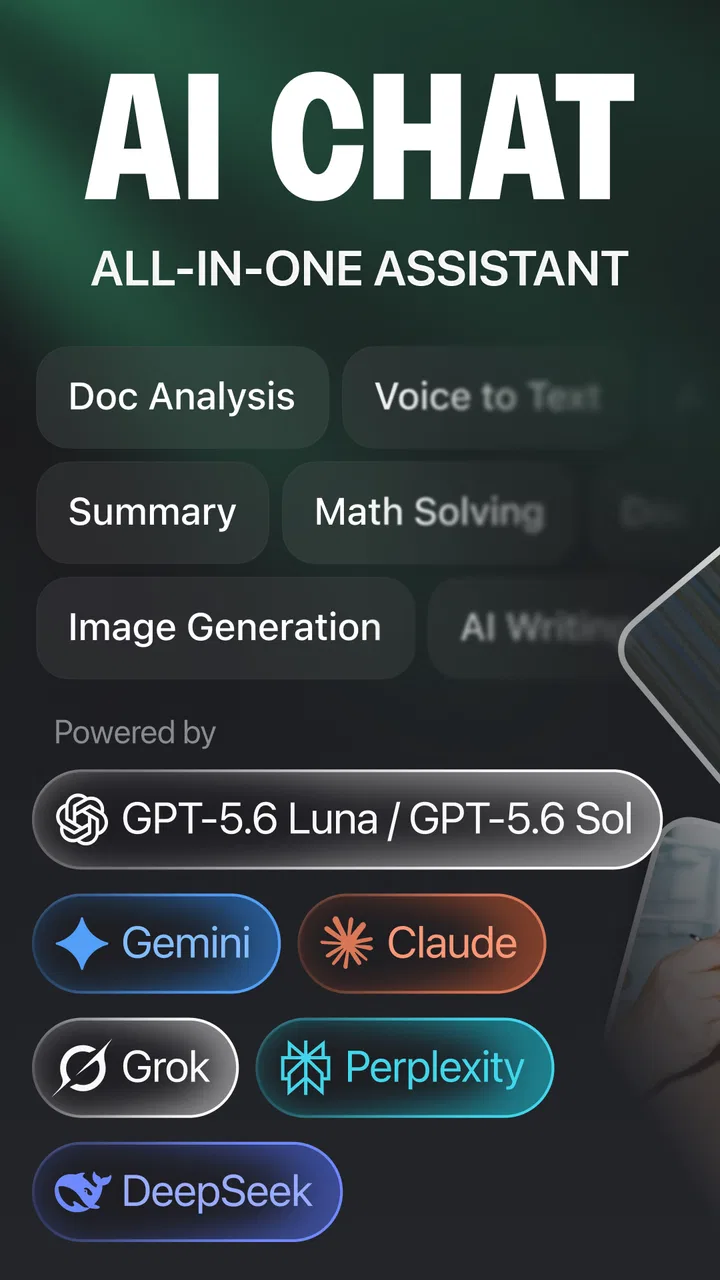
I approached ChatGO - AI Chat Assistant as a practical lifestyle tool rather than as a replacement for every app on my phone. Its appeal is simple: it brings writing help, study support, image generation, and everyday task assistance into one place. That combination can be convenient when I want to move quickly between very different jobs, although it also means the experience depends heavily on how clearly I ask for what I need.
Made by Wachanga, ChatGO is free to install and aimed at Teen users. It has reached over a million installs and holds a 4.2 average from around 130 thousand ratings, which suggests that the broad idea is connecting with a sizeable audience. I found it most useful when I treated it as a flexible assistant for drafts, explanations, brainstorming, and small planning tasks—not as an authority that should make important decisions for me.
How ChatGO feels in everyday use
The first thing I noticed is the range of situations it tries to cover. One moment I could use it to turn rough notes into a clearer message; the next, I could ask for a study explanation or explore an image idea. That variety is the central reason to try it. Instead of opening a writing app, a study helper, and a separate creative tool, I can begin with one conversation and decide what kind of help I need as the task develops.
You May Also Like

 Blood Strike: 2.5 Anniversary
Blood Strike’s Loadouts Turn Every Drop Into a Tactical Gamble
A close look at Blood Strike’s custom loadouts: how fast access to signature weapons reshapes its battle royale rhythm, rewards preparation, and narrows the gap between fights.

 Pandora - Music & Podcasts
Pandora’s Music Is Easy to Start, but Harder to Recover
Pandora’s strength is its low-effort path from a seed to a station. Its weak spot is how much confidence it asks you to place in connection, setup, and quiet recovery.

 8 Ball Pool
 Is Built on Rivalries, Rematches, and Routine
A close look at the rivalries, rematches, shared routines, and unanswered safety questions that turn a quick pool match into a persistent mobile community.

 Samsung Music
’s Quiet Strength Is Playing What You Already Own
Its reach comes less from spectacle than from dependable access to a personal library. That simplicity is both the app’s strongest retention engine and its ceiling.

 AccuWeather: Weather Radar
AccuWeather Review: A Quick, Clear Forecast for Everyday Decisions
For everyday plans, the best forecast is the one you can understand quickly. AccuWeather makes rain timing, radar, and local conditions easy to act on, with a few trade-offs.

 Hill Climb Racing
Why Hill Climb Racing Still Turns Crashes Into One More Run
A tiny car, a bumpy hill and one more upgrade: Hill Climb Racing keeps resurfacing because its simple chaos makes every near-miss feel personal.
More From Our News Desk



That convenience is especially noticeable during a busy day. Imagine I am preparing for a class, answering messages, and organizing a weekend plan. I might start by asking for a difficult topic to be explained in simpler language, then request a short outline for an email, and finally use the image-generation side to visualize a poster concept. The value is not that every answer will be perfect. The value is the reduced friction between those jobs.
I would still read every response carefully. AI-generated text can sound confident even when it needs correction, and a polished paragraph is not automatically an accurate one. For schoolwork, I use the app to understand a subject, create practice questions, or improve structure rather than submit its wording without checking it. For personal planning, I treat suggestions as starting points and adjust them to fit real constraints.
A useful workflow for writing
For writing, I got better results when I supplied the audience, tone, length, and purpose in the first request. “Make this better” is too vague. A more useful instruction explains whether I need a friendly message, a formal request, a short caption, or a clear explanation for someone unfamiliar with the topic. I also prefer asking for two or three alternatives instead of accepting the first draft, because the differences often reveal which tone suits the situation.
A practical trick is to separate content from style. I first provide the facts I want included and ask for a clean draft. Then I ask ChatGO to shorten it, make it warmer, or remove language that sounds too formal. This reduces the chance that a rewrite will quietly change the meaning. It is particularly helpful for messages where I want to sound natural without spending ten minutes editing every sentence.
The trade-off is that the assistant can make personal writing feel generic if I let it do too much. I get the best result when I keep a sentence or two in my own voice and use the app for organization, clarity, or alternatives. In that role, it feels like an editor sitting beside me rather than a machine writing my entire personality.
Study help that works best with active participation
ChatGO can be useful for learning because I can ask for the same idea in different ways. If a first explanation is too technical, I can request a simpler version, an analogy, a step-by-step breakdown, or a short quiz. That flexibility is more valuable than receiving one long answer, especially when I am stuck on a specific part of a subject.
My preferred study workflow is to ask for an explanation, close the response mentally, and then request practice questions without immediately looking at the answers. I can also ask it to point out gaps in my reasoning after I write my own solution. This turns the assistant into a practice partner instead of a shortcut. The non-obvious benefit is that the same topic can be approached from several angles without searching through multiple pages or videos.
There is an important limitation here. I would not use it as the only source for exam preparation, medical information, legal topics, or anything where a small error has serious consequences. It may simplify a complex subject so aggressively that important exceptions disappear. For reliable study, I compare its explanation with class materials or a trusted reference, then use the app to test whether I can explain the idea in my own words.
Image generation is best treated as an idea laboratory
The image feature adds a creative dimension that makes the app feel broader than a conventional chat tool. I find it more useful for exploring directions than for expecting a finished professional asset immediately. I can describe a mood, composition, color approach, or visual subject and use the result to decide what I like before investing more time in a design.
Specific prompts make a noticeable difference. I include the subject, setting, atmosphere, viewpoint, and intended use, then refine one element at a time. If I change everything in every new request, it becomes difficult to understand why the result improved or worsened. Asking for a cleaner background or a different camera angle is more productive than starting from scratch with a completely new description.
I would be cautious about using generated images for work that requires exact branding, precise text, or faithful representation of a real person. Creative exploration is where this feature makes the most sense. If I need consistent characters, exact product details, or dependable typography, a dedicated design application is likely the better choice.
Small daily tasks where the assistant saves time
The daily-task side is less dramatic but often more practical. I can use it to break a vague goal into smaller actions, prepare a packing checklist, organize ideas for a meal plan, or turn scattered notes into a sequence. The best prompts include constraints such as available time, preferred style, or things I want to avoid. Without those details, the response tends to be broad and less useful.
One workflow I liked was asking for a plan in two layers: first the essential actions, then optional improvements if I have extra time. That prevents an ambitious list from becoming another source of stress. I also ask for a “minimum version” of a task when I am tired or short on time. This is a subtle strength because it encourages realistic planning instead of producing an impressive but impractical schedule.
Still, ChatGO is not a full task-management system in the traditional sense. A dedicated calendar or reminder app is better for recurring alerts, fixed appointments, and dependable tracking. I use ChatGO to think through a plan, then transfer the final commitments into the tools I already trust. That division of labor keeps the assistant useful without expecting it to replace every specialized feature.
What the current release means for users
The current version is 1.10.1, and the app was released on December 28, 2025. Those details place ChatGO in a relatively early stage of its product life, so I see it as an evolving assistant rather than a completely settled platform. The combination of writing, study, image, and daily-task support gives Wachanga a wide foundation, but the quality of the experience will depend on how consistently those areas are refined.
For someone installing it now, the main benefit is access to a broad toolkit without an upfront purchase. The app is free, but optional in-app purchases range from $1.99 to $99.99 per item. That makes it important to pay attention to any purchase prompts and to decide in advance whether the free experience is enough for your needs. I would not assume that every capability has the same limits or availability simply because it appears inside one app.
Existing users should judge updates by practical improvements rather than by version numbers alone. I would look for smoother movement between writing, studying, and image creation, clearer handling of longer conversations, and better control over the format of answers. I would also pay attention to whether the app makes it easier to refine a previous request instead of forcing me to repeat the entire context.
That last point matters more than it may seem. An assistant becomes genuinely helpful when it remembers the immediate purpose of a conversation and lets me make precise corrections. If I am revising a letter, changing the tone should not require rebuilding the whole request. If I am studying, asking for a harder example should build on the same topic. Small improvements in continuity can have a bigger everyday effect than adding another headline feature.
Where it compares well with familiar alternatives
Compared with using a general search engine, ChatGO is better at transforming information into a requested format. Search is still preferable when I need original sources, current reporting, or direct confirmation from an official page. ChatGO is more convenient when I already know the kind of output I want, such as a summary, outline, practice exercise, or rewritten message.
Compared with a dedicated writing assistant, its advantage is breadth. I do not have to leave the same environment when a writing task turns into brainstorming or image exploration. The disadvantage is depth: a specialized writing app may offer more precise editing controls, document workflows, or style management. I would choose ChatGO for quick, mixed tasks and a focused writing tool for long documents that need careful revision.
Compared with a conventional study app, ChatGO offers more conversational flexibility. I can ask follow-up questions in my own words instead of navigating a fixed lesson structure. A dedicated learning platform may be stronger for a complete curriculum, progress tracking, and carefully reviewed exercises. ChatGO suits learners who already know what they are trying to understand and want an adaptable explanation.
Compared with a standalone image generator, the integrated approach is convenient for early concepts. I can discuss an idea and then visualize it without switching context. A specialist tool is likely the better choice when I need advanced controls, repeatable visual consistency, or a production-ready workflow. The right choice depends on whether the image is the destination or simply part of the thinking process.
Friction I would want new users to understand
The biggest learning curve is not navigation; it is prompting. Someone expecting a one-line request to produce exactly the desired result may find the app inconsistent. I had to become more explicit about audience, constraints, and format. That is not unique to ChatGO, but the broad range of tasks makes it especially important because a prompt that works for a study explanation may be poorly suited to an image request.
Another limitation is the temptation to accept fluent answers too quickly. The app can make a weak idea look finished, which is risky when I am tired or in a hurry. I recommend asking it to show assumptions, list uncertainties, or provide a shorter answer that is easier to check. These requests do not guarantee correctness, but they make the output easier to evaluate.
The purchase structure may also affect how different people experience the app. Since the app is free to start while offering paid items, I would try the basic workflow before spending anything. If my needs are occasional writing help and simple brainstorming, paying may not be worthwhile. If I use it regularly across several parts of my day, I would first identify which capability actually saves me time instead of buying access to everything automatically.
Privacy is another reason to use judgment. I avoid pasting passwords, private identification details, confidential work material, or sensitive information about other people into any AI assistant. Even when a task seems harmless, I can usually replace names and specific details with placeholders. That habit preserves much of the convenience while reducing unnecessary exposure.
Who should try it, and who should skip it
I think ChatGO is a good fit for students who want conversational explanations, people who regularly draft messages, and creative users who like turning rough ideas into visual directions. It also suits anyone who enjoys experimenting with different ways to organize a problem. The app is particularly appealing if I want one flexible starting point instead of several narrowly focused tools.
I would skip it if I need a highly structured course, advanced document editing, dependable reminders, or professional image-production controls. It is also not the right choice for someone who does not want to review AI-generated material. The convenience comes with responsibility: I still need to check facts, protect sensitive information, and decide whether the result sounds like something I would actually say.
Families should also consider the Teen content rating when deciding who will use it. That rating is a useful reminder that the app should be approached with age-appropriate supervision and sensible online habits, particularly when younger users are experimenting with open-ended prompts.
What I would watch as ChatGO develops
Because the app is still early in its release history, I would watch how Wachanga balances breadth with reliability. Adding more abilities is less important to me than making the existing ones dependable. Better refinement tools, clearer transitions between task types, and more transparent handling of paid capabilities would make the assistant easier to use regularly.
I would also watch whether the app becomes better at helping users verify and improve their own work. Features that encourage comparison, revision, source checking, or step-by-step reasoning would strengthen its educational and practical value. The best version of this kind of assistant should not merely produce an answer; it should help me understand why that answer is useful and where I need to take over.
After using it, my view is positive but measured. ChatGO is a convenient lifestyle app with enough range to earn a place in a busy person’s toolkit, especially when writing, learning, planning, and visual brainstorming overlap. Its strongest quality is the ability to move between those activities without making me start from zero each time. Its weakest point is the same flexibility: without clear instructions and personal review, the results can be shallow, generic, or unsuitable for an important task.
My recommendation is to try the free experience first and judge it by one repeated routine. Use it for a week to rewrite messages, practice a subject, plan small tasks, or develop image ideas, then ask whether it genuinely saves time. If it does, ChatGO can be a useful general assistant. If I need specialist depth, verified research, structured learning, or professional creative control, I would keep my dedicated alternatives and use this app as a fast companion rather than a complete replacement.
FAQs for ChatGO - AI Chat Assistant
01What features does ChatGO offer to enhance my messaging experience?
ChatGO - AI Chat Assistant comes with a variety of features designed to enhance your messaging experience. These include AI-driven conversation suggestions, real-time language translation, customizable chat themes, and seamless integration with other apps. Its AI capabilities enable it to learn from your interactions, providing more personalized responses over time.
02Is ChatGO secure and does it protect my privacy?
Yes, ChatGO prioritizes user privacy and security. The app uses end-to-end encryption to ensure that your conversations remain private. Additionally, it adheres to strict data protection policies, meaning your information is not shared with third parties without your consent. Always check the app's privacy policy for detailed information.
03Does ChatGO support multiple languages?
ChatGO supports multiple languages, making it ideal for users who communicate across different languages. The AI chat assistant can provide real-time language translation, allowing seamless conversation without language barriers. This feature is especially useful for international users or those learning new languages.
04What are the system requirements for installing ChatGO on my device?
To install ChatGO, ensure that your device meets the minimum system requirements. For Android, it requires version 5.0 or higher, and for iOS, version 11.0 or later. Additionally, make sure you have sufficient storage space and a stable internet connection for optimal performance.
05Can ChatGO integrate with other apps on my device?
Yes, ChatGO is designed to integrate smoothly with other apps on your device. It supports popular messaging platforms and social media apps, allowing you to use its AI features across different services. This flexibility enhances your overall digital communication experience, making it more efficient and enjoyable.
Pros
- Intuitive user interface for easy navigation.
- Supports multiple languages efficiently.
- Integrates well with other productivity apps.
- Quick response time for AI-generated answers.
- Customizable settings for personalized experience.
Cons
- Occasional lag in loading complex queries.
- Limited offline functionality available.
- Subscription required for advanced features.
- Notifications can be overly frequent.
- Voice recognition needs improvement.

ChatGO - AI Chat Assistant
Gallery